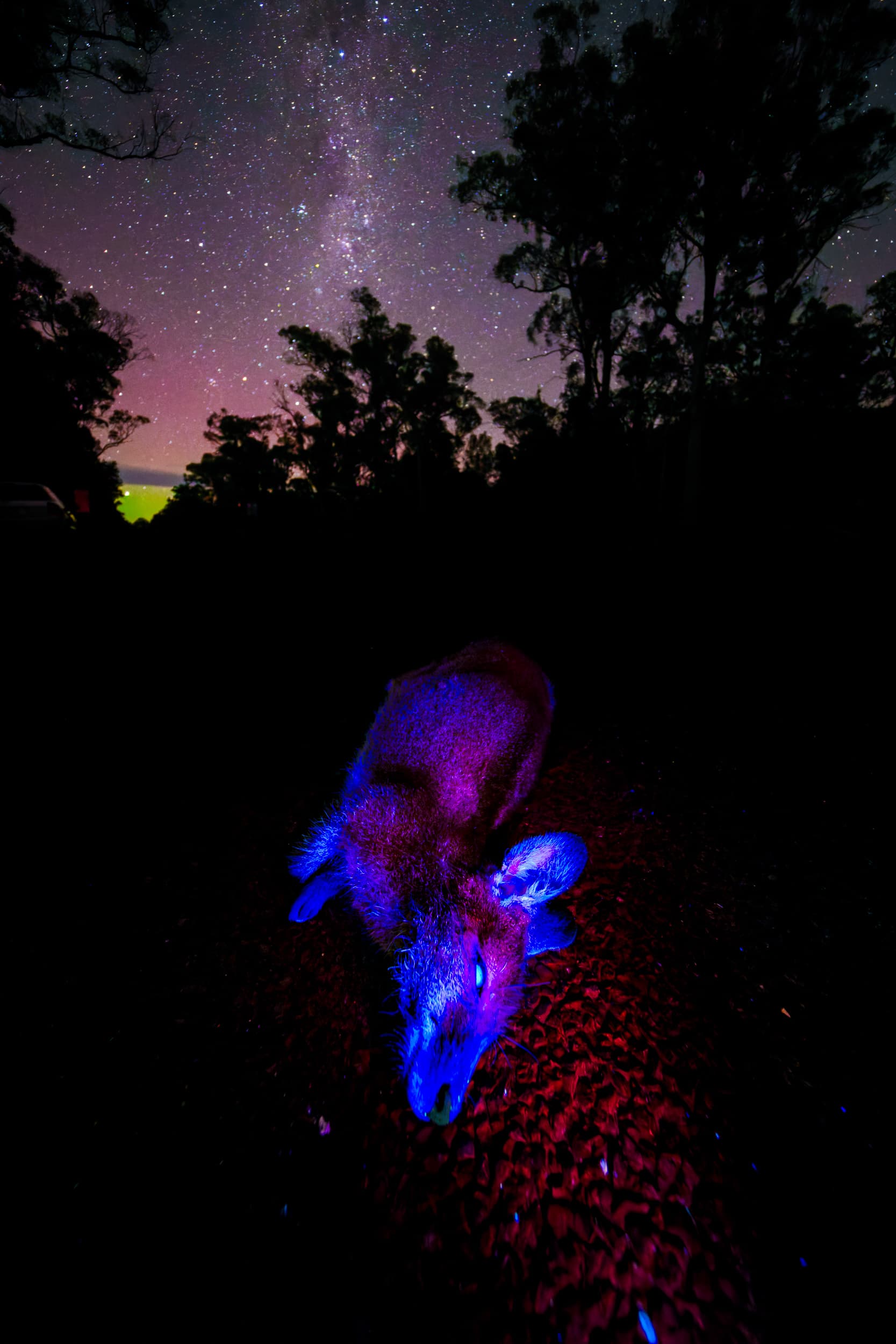
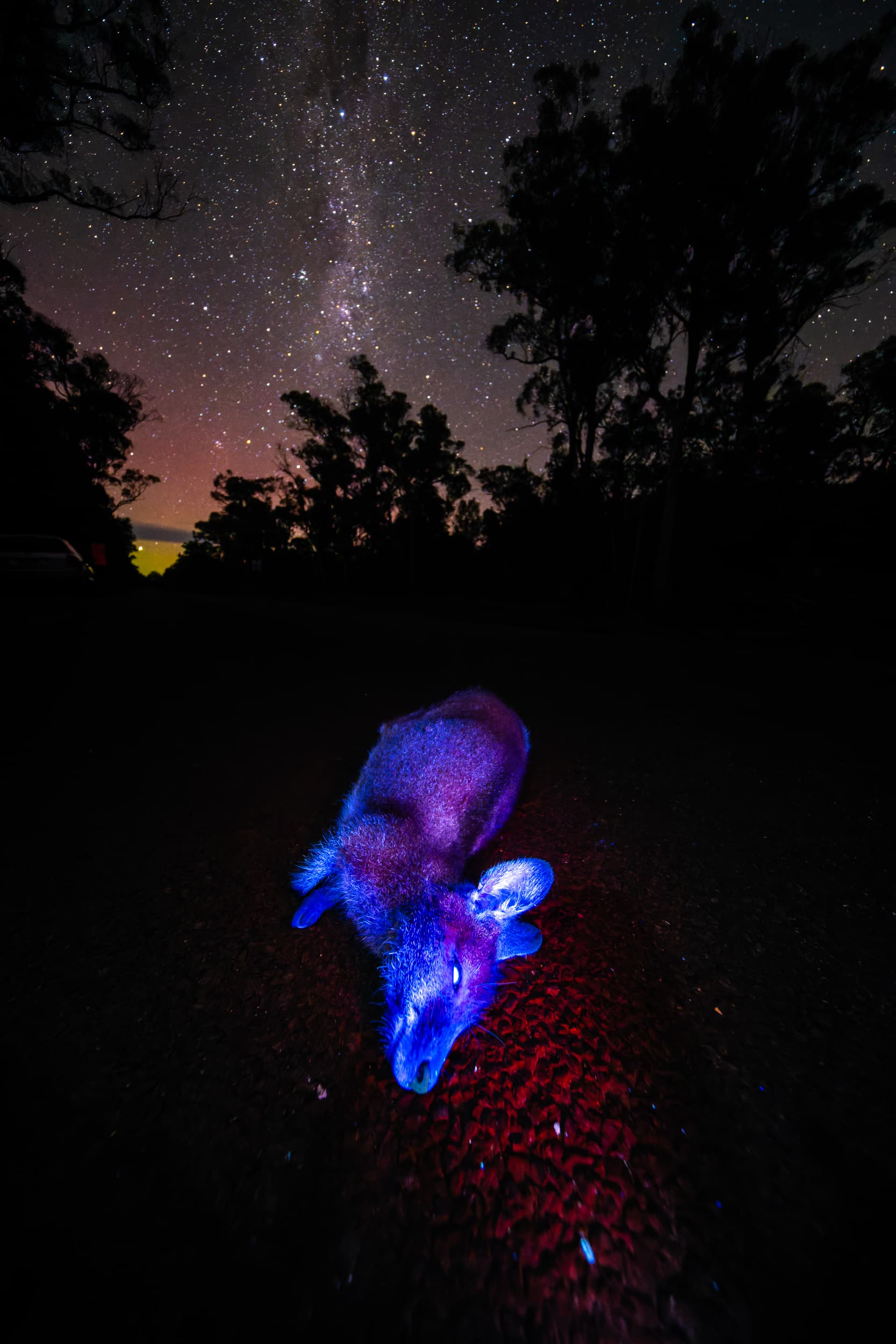
Method over mythology.
The pictures may feel atmospheric, but the method is not mystical. The process is built around recurrence, restraint, and the ability to explain what happened in the field after the fact.
The threshold is simple: no image is worth a stressed animal or a more vulnerable locality. Sensitive taxa force locality reduction. Encounters are kept brief. Lighting changes, baiting, and manipulative staging are rejected where they would distort behaviour or increase risk.
A large part of the work happens at the edge of visibility. When ultraviolet or other excitation methods are used, the record should still explain itself afterwards: what wavelength, what filter path, what compromise, what the camera is actually seeing.
Post is used to make the image legible, not to fabricate an event. Tonal translation, stitching, dust removal, and colour balancing are part of the craft. Inventing ecology is not.
The surrounding system should help the work stay useful: taxa pages can hold conservation context, journals can hold longer process notes, and product surfaces can express rights and fulfilment terms without flattening everything into a generic shopfront.
Publicly, the most useful comparison is usually the simplest one: what changed, what held, and where the final frame diverged from the starting plate. The deeper layer-registration surface is being reserved for the authoring side.